Best Time to Visit Khao Sok National Park
Explore the best time to visit Khao Sok, from dry trails and Rafflesia blooms to lush green jungle, fewer crowds, cave closures, and Krittanon’s best shoulder-month picks.
Choose your month for the experience you want; route access still depends on conditions on the day.
Last updated: September 9, 2026
What can a lake night add to the season you choose? Discover a trip built around sunset boating and morning kayaking. Discover the overnight lake rhythm
| Peak Dry Season | Dec – Feb | Cool (25-27°C), lowest rainfall, clearest skies | Very high – book lake 4-8 weeks ahead |
| Hot Season | Mar – May | Hot (28-35°C), increasing humidity, Rafflesia blooms | Moderate, declining through May |
| Green / Wet Season | Jun – Oct | Heavy afternoon rains, lush jungle, full waterfalls | Low – easiest availability |
| Transition | Nov | Rains tapering, drying out, crowds building | Low to moderate |
Is There a “Best” Time to Visit Khao Sok National Park?
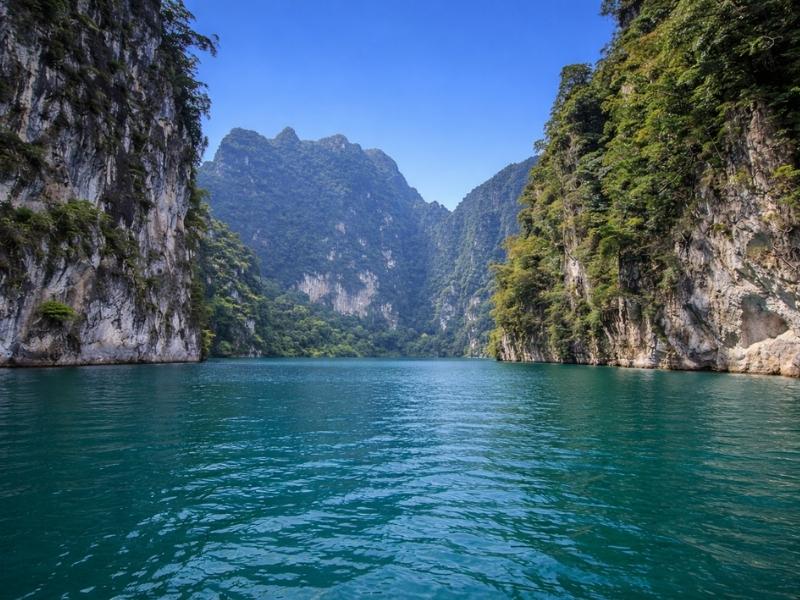
There is no universally best month to visit Khao Sok, but there is a best month for each type of traveler. Khao Sok sits at the center of the Kra Isthmus and receives rainfall from both monsoon systems, making it one of the wettest places in Thailand year-round. What changes between seasons is not the beauty of the destination but the specific activities available, the size of the crowds, the price of accommodation, and which parts of the park are accessible.
Most of what gets written about visiting Khao Sok oversimplifies the seasonal question into “dry season is best.” Krittanon has been guiding here since 2011 and the picture is considerably more interesting than that. The dry season produces the conditions most travelers default to expecting, clear trails, low humidity, easier logistics. It also produces the crowded pier at Ratchaprapha Dam in January, the cave hike with 80 other people, and the floating bungalow that was sold out six weeks before you decided to book.
The wet season transforms the park into something the dry-season photographs cannot represent. The jungle shifts from beautiful to electric. Every surface is saturated green. Waterfalls that trickle in February run as columns of white water in September. The Sok River fills high enough for river tubing to become genuinely exciting. The mist that sits on Cheow Lan Lake in the early morning is thicker and lower, and the floating bungalow experience has an atmospheric quality in wet season that clear-sky dry season simply cannot replicate.
The tradeoffs are real and covered in full below. But the starting point is this: Khao Sok is a rainforest. It was built by rain. It functions best with rain in it. The travelers who arrive during the wet months expecting disappointment almost always leave surprised.
What Is the Dry Season Like in Khao Sok (December to April)?
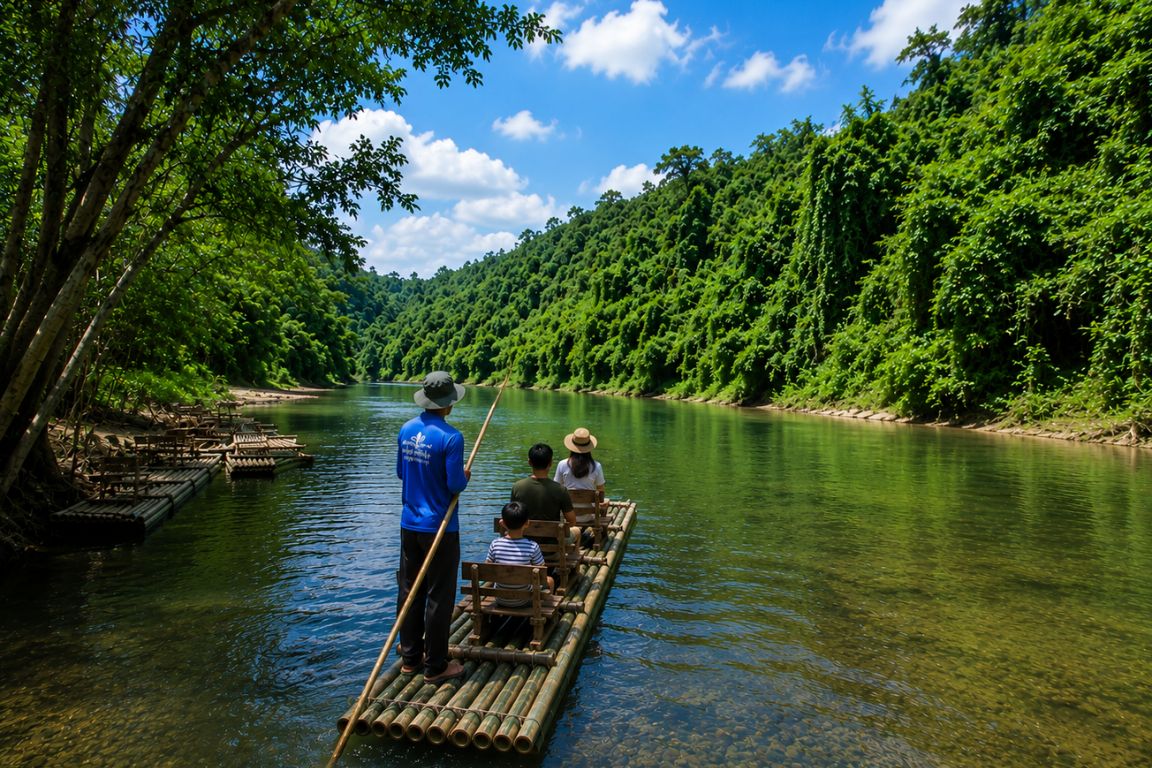 The dry season runs December through April, with January and February representing the coolest and driest conditions, averaging around 25-27°C with roughly 60-65 mm of rainfall per month. March and April shift into the hot season: temperatures climb toward 35°C, humidity rises sharply, and the river activity options narrow as the Sok River drops. The dry season is the easiest time to hike, the best time to see the Rafflesia flower, and the hardest time to find a floating bungalow without booking well in advance.
December through February is when Khao Sok operates at maximum visitor volume. The pier at Ratchaprapha Dam handles tour groups from Phuket, Krabi, and Khao Lak simultaneously. Cave tours run at full capacity. Floating bungalows at popular mid-range and luxury properties require booking one to three months ahead, with some properties like Panvaree The Greenery filling their peak-week inventory six months or more in advance. For travelers who are flexible about dates and can lock in bookings early, this window offers the most reliable conditions for the widest range of activities.
The Rafflesia flower, one of the world’s largest, blooms between December and March in Khao Sok’s deep jungle. Each bloom lasts only three to five days before collapsing into decay. Sightings are never guaranteed. The guides know which host vines are currently active and can time the hike to the most recent information. If seeing the Rafflesia is a specific goal for your visit, January and February represent the peak window, and you must book a guided Rafflesia hike specifically since the location changes each season.
March and April are worth treating as a separate consideration. The heat is the dominant factor: 30 to 35°C with rising humidity produces conditions that most travelers find demanding by late morning. Early starts, around 7 am, make trail activities manageable. The Sok River drops low enough in these months that river tubing is sometimes not possible. Wildlife activity on the lake shifts earlier as animals seek shade, which means the pre-dawn boat safari on the lake becomes even more productive for elephant sightings in this window than at other times of year. Crowds begin declining noticeably from late March onward.
What Is the Wet Season Like in Khao Sok (May to November)?
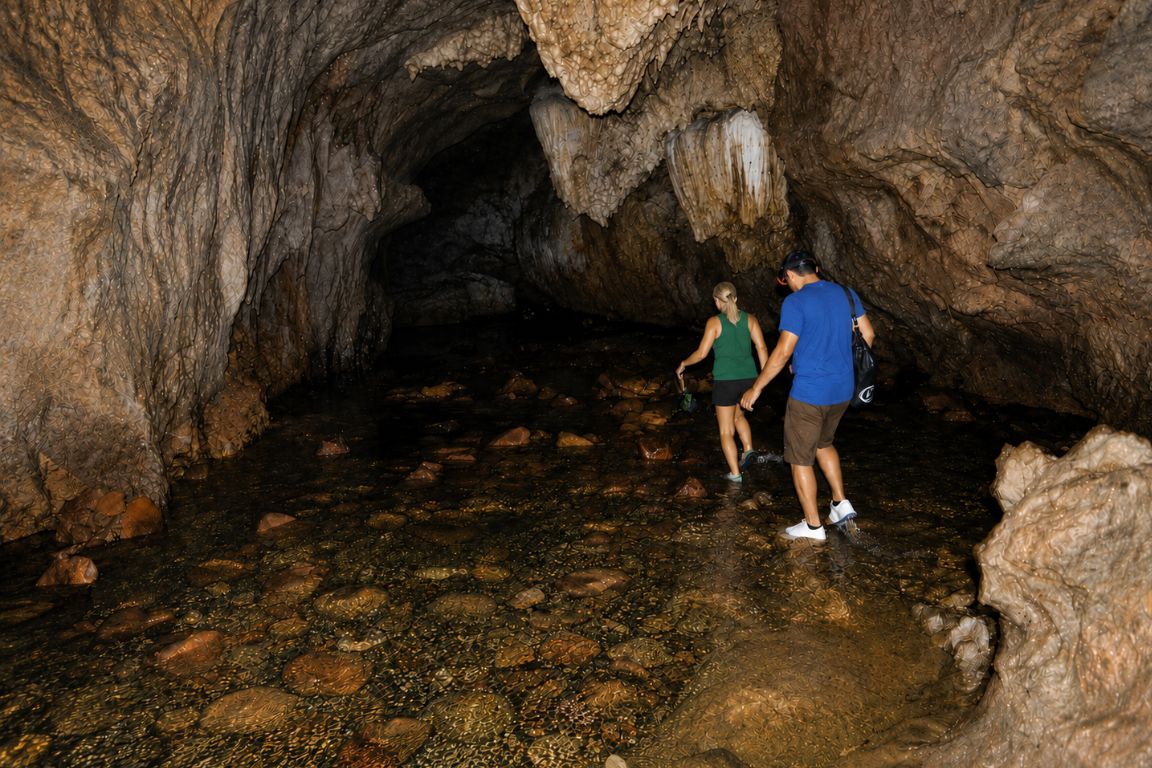 The wet season spans May through November, with peak rainfall in August and September averaging over 400 mm per month. Despite the name, wet season does not mean all-day rain. The typical pattern is dry mornings with sunshine, heavy afternoon showers lasting one to two hours, and clear evenings. The jungle is at maximum intensity of green. Waterfalls are spectacular. River activities become excellent. Nam Talu Cave closes June 1 through November 30 due to flash flood risk. Everything else in the park remains open and operational year-round.
The wet season misconception that keeps travelers away is the assumption that heavy daily rainfall means an experience destroyed by weather. That is not how tropical rainforest afternoon rain works. Most wet-season mornings at Khao Sok begin clear. By noon the humidity builds. By mid-afternoon the sky opens for an hour or two. Then it passes. The forest steams. The light turns gold. By late afternoon the air is cleaner and cooler than any dry-season afternoon can produce, and the sunset boat safari on the lake runs as normal.
The Nam Talu Cave closure is the most important practical constraint of the wet season and deserves direct treatment. The Department of National Parks officially closes Nam Talu Cave to visitors from June 1 through November 30 each year due to the risk of flash flooding. This is not a suggestion. It is an enforced closure, and unauthorized tours into the cave during this period have resulted in fatalities, including the death of a guide during a tour in August 2024 when 22 tourists narrowly escaped. Any operator offering Nam Talu Cave tours between June and November is operating illegally and dangerously. Do not join them.
With that constraint clearly stated: the wet season delivers the Sok River at its best for tubing and canoeing, the park at its most photogenic, the floating bungalow mist experience at its most atmospheric, and the village trails with waterfalls running at full volume. Wildlife activity on the ground increases as the forest produces more food. Frogs, insects, and nocturnal animals on the night safari are at their most abundant. The lake boat safaris remain operational. The overall activity menu for a 2 to 3-day wet-season trip barely differs from a dry-season trip, minus Nam Talu Cave.
Not sure how to structure two days in Khao Sok between the lake, the jungle, and the wildlife? Check out our 2-day Khao Sok National Park tours itinerary before you start planning.
Which Months Have the Fewest Crowds?
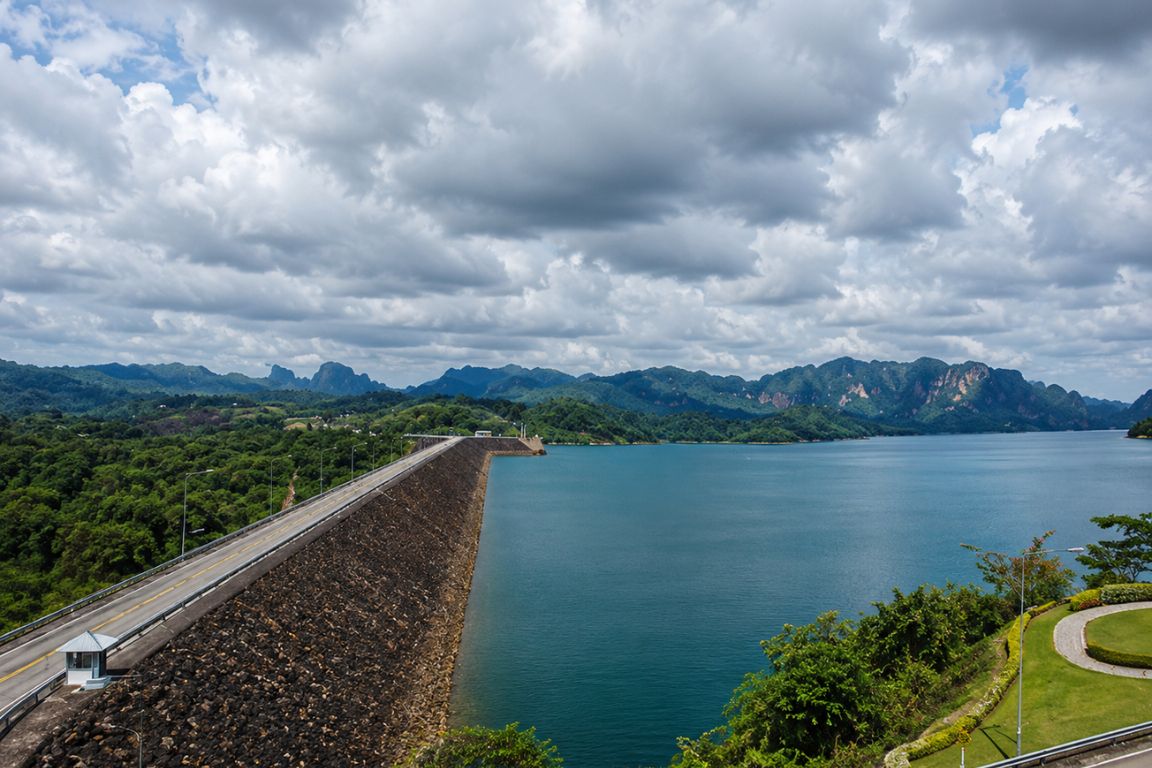 May, June, September, and October are the quietest months at Khao Sok by a significant margin. Visitor numbers during these months are a fraction of the December to February peak. Floating bungalows can often be booked one to two weeks ahead, sometimes days ahead. Village accommodation is easy to find on arrival. Tour groups are small. The pier at the lake is calm. For travelers who value space and quiet as part of the natural experience, these four months represent the most authentic version of what Khao Sok can be.
The crowd pattern at Khao Sok follows the broader southern Thailand tourist season closely. When Phuket and Krabi are at peak occupancy, so is Khao Sok. The relationship is direct: the lion’s share of Khao Sok visitors come from or are heading to the beach destinations, and the beach crowd peaks in December through February.
What the low-crowd months actually feel like on the ground is worth describing precisely because the contrast with peak season is so sharp. In May, the pier at Ratchaprapha Dam handles manageable volumes. Boats leave without queuing. The cave hikes in the morning on the lake run with groups of four to eight people rather than twenty-five. The floating bungalows that are half-full in September have the sunset wildlife safari to themselves rather than sharing it with five other boats from different operators. The night safari in the village has two guests rather than twelve, which means the guide walks more slowly, stops more often, and shows things that get skipped when there is a crowd to keep moving.
The practical flip side is that some infrastructure thins out in the very low months. A few village restaurants close for the season. Some tour departures run less frequently and may require a minimum group size that solo travelers need to fill. None of this fundamentally alters the experience, but it is worth knowing before you arrive expecting the same volume of options as peak season.
Want an honest comparison before you finalize your southern Thailand itinerary? Here’s our Khao Sok vs Krabi vs Phuket guide so you pick the destination that actually fits your trip.
How Does Seasonality Affect Cheow Lan Lake and the Floating Bungalows?
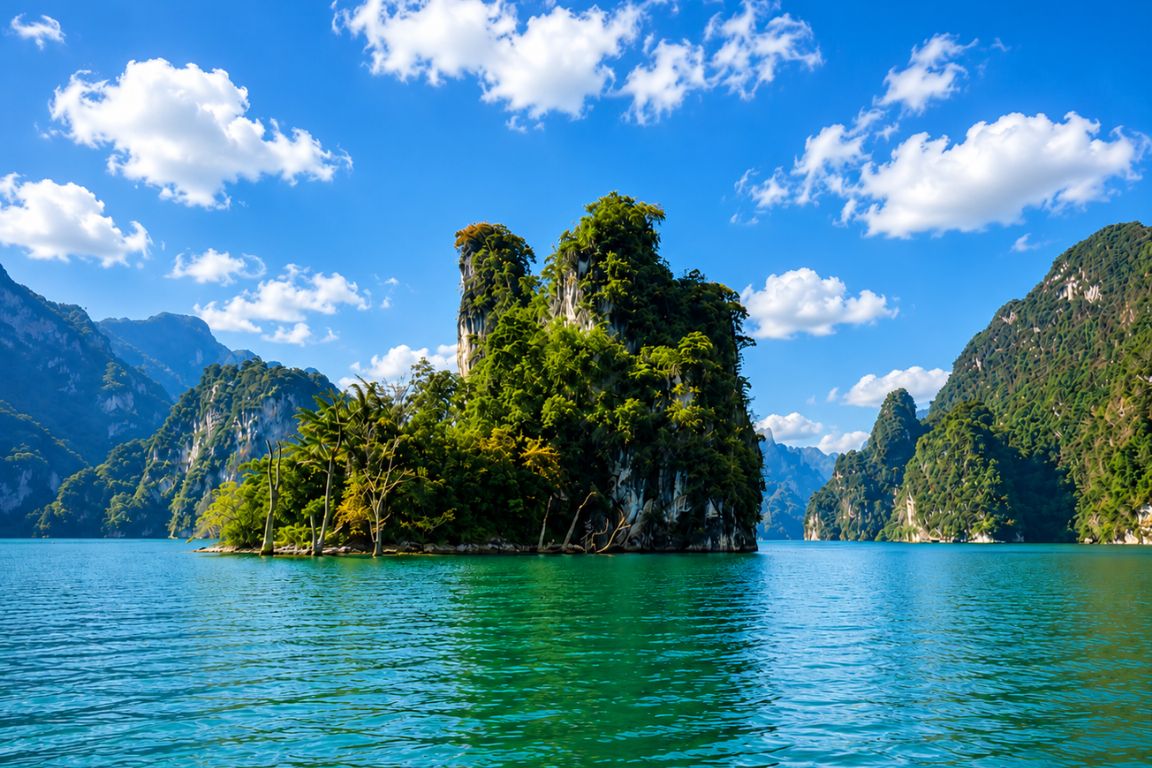 Cheow Lan Lake is open year-round. The floating bungalows operate in all months. The primary seasonal difference at the lake is visual: dry season brings clearer skies and calmer water, while wet season produces the famous early-morning mist effect that many travelers describe as the most haunting and beautiful thing they have seen in Thailand. Wildlife activity on the lake’s boat safaris is generally higher in the dry season for elephant sightings at the shoreline, though overall wildlife sightings depend heavily on time of day regardless of season.
The mist question deserves its own explanation because it is consistently misrepresented in travel content. The dense low mist that covers Cheow Lan Lake in the predawn and early morning hours that appears in most of the compelling lake photography occurs more reliably during the wet season and in the transition months of November and May than during peak dry season. The combination of high humidity and cool overnight temperatures creates the conditions for mist to form at the water surface. In January and February, the air is drier and the mist is often thin or absent. Travelers who arrive in December specifically for the “mist on the lake at dawn” photograph are more likely to achieve it in September or October.
Wildlife dynamics on the lake shift with season in a specific way. During the dry months, large mammals including elephants must travel further to find water and food, which means they occasionally come to the lake shoreline to drink, particularly in the late afternoon. This is why elephant sighting probability on the boat safari is considered slightly higher in the hot dry months of March through May than at other times. In the wet season, the animals have water available throughout the forest and range less predictably to the lake edge. That said, the overall wildlife count on a wet-season visit is not lower. It is different. More frogs, more insects, more bird activity, more fruit in the trees, more noise from every direction.
Advance booking for floating bungalows follows the crowd pattern directly. December through February requires four to eight weeks minimum for any quality mid-range or luxury property. March and April require two to four weeks. May through October can often be arranged one to two weeks ahead for most properties, with some availability achievable on shorter notice in September and October. The Christmas and New Year window, roughly December 20 through January 5, is the hardest booking period of the year by a significant margin. Panvaree The Greenery and 500 Rai Floating Resort regularly fill these dates six months in advance.
Cheow Lan Lake tours vary more than most booking pages let on – our Khao Sok lake tours explained guide breaks down the different options, what’s included, and which experience actually delivers for the price.
How Does the Weather Affect Jungle Trekking and Cave Tours?
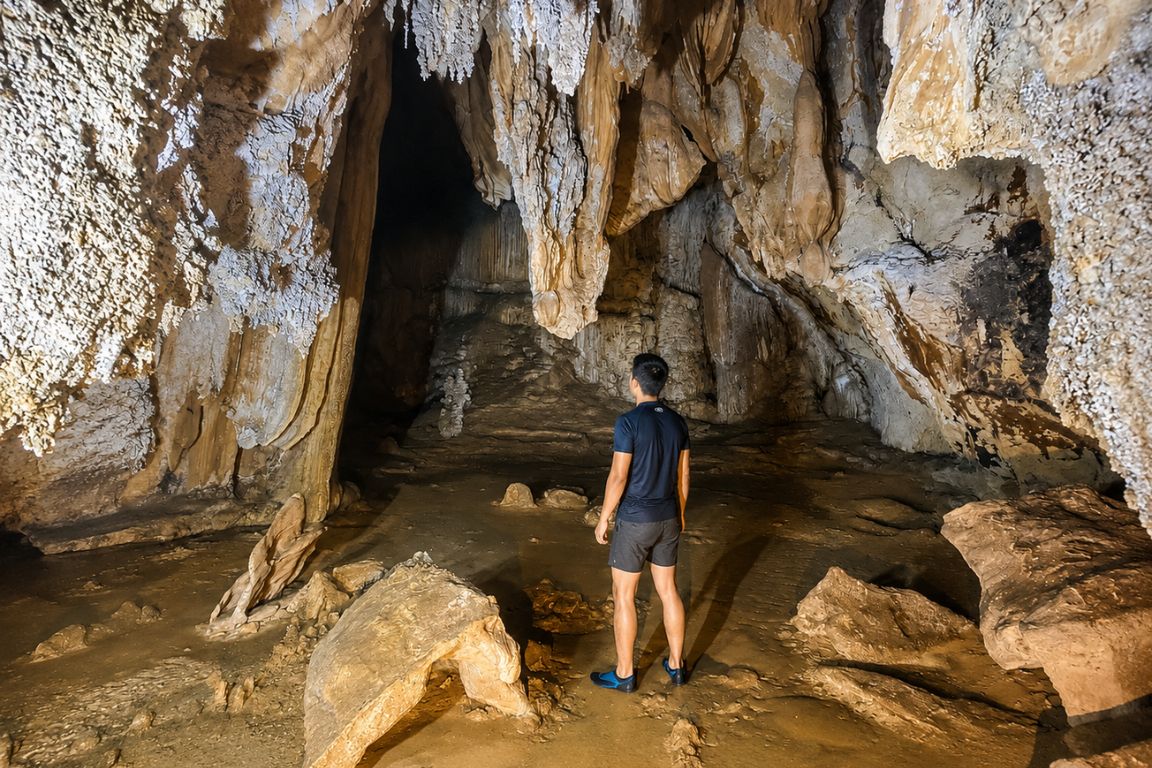 Jungle trekking operates year-round at Khao Sok, but trail conditions shift significantly between seasons. Dry season produces firm footing, lower humidity, and easier wildlife visibility through thinner undergrowth. Wet season produces muddy, slippery trails requiring proper footwear, higher humidity, but denser flora, more dramatic scenery, and a higher density of visible insects, amphibians, and birds. Nam Talu Cave is officially closed June 1 through November 30. Coral Cave and other lake-accessible caves remain open in the wet season under guide supervision.
The trekking experience in Khao Sok during the wet season is not worse than during the dry season. It is wetter and more physically demanding, which for the right traveler is better. The jungle under monsoon is a different ecosystem from the jungle in February. Pitcher plants have water in them. Fungi appear on every fallen trunk. The trail to Bang Hua Rad Waterfall, modest in the dry season, becomes a walk past a seriously impressive cascade after two weeks of heavy rain. What was a trickle in March is a roar in August.
Footwear matters enormously in wet season. Closed-toe trail shoes with grip are mandatory. Some travelers attempt jungle hikes in flip-flops or sandals after seeing dry-season photos and find themselves struggling within the first kilometer. Leeches appear on wet-season trails. They are not dangerous but are startling if you are not expecting them. Your guide will know the leech-heavy stretches and can advise on prevention. Tucking trousers into socks or wearing leech socks eliminates most contact.
Night safaris run year-round and are, if anything, better in the wet season. The density of nocturnal life on a wet-season night safari is higher than at any other time of year. Tree frogs are everywhere. Flying insects cross the headlamp beam continuously. The jungle sounds fuller and more alive, because it is. The animals that define a night safari in Khao Sok, the civet cats, barking deer, rhinoceros beetles, and sleeping birds, are present and active regardless of season. The difference is volume and density.
We’ve put together a full clothing breakdown in our what to wear in Khao Sok National Park tours guide so you know exactly what to bring for every activity from night safaris to kayaking on the lake.
What Is Khao Sok Like Month by Month?
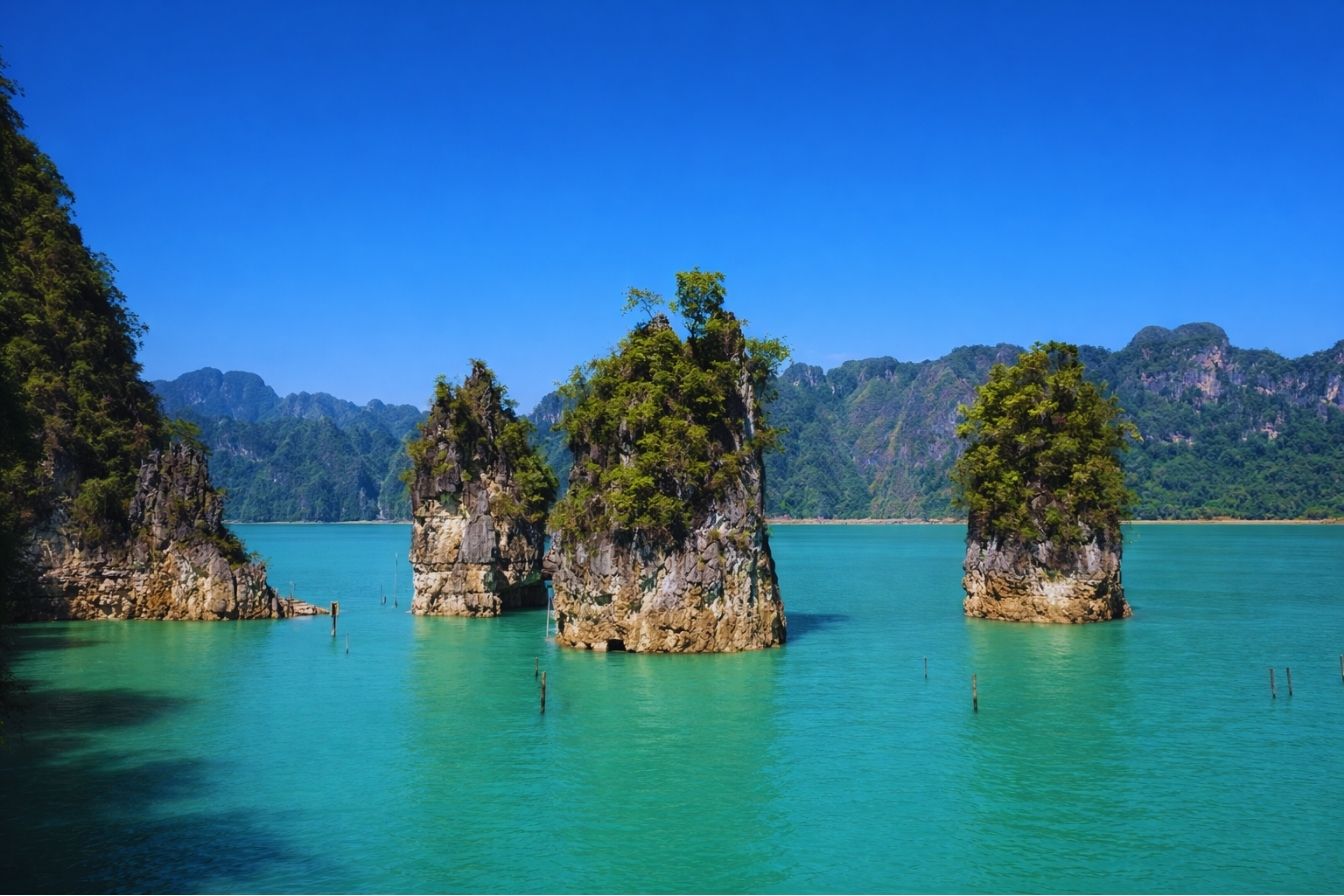 Each month at Khao Sok has a distinct character shaped by rainfall totals, temperature range, crowd levels, and which activities are at their peak. January and February offer the easiest conditions and the highest demand for floating bungalows. May and October offer the best balance of lush jungle, quiet trails, and available accommodation. August and September suit travelers who specifically want the most dramatic rainforest experience with minimal crowds. No month is a bad choice if you understand what it delivers.
January
January is the driest and most popular month. Rainfall drops to around 60 mm, the air temperature sits comfortably between 25 and 27°C, and the humidity is lower than any other time of year. Trails are firm, cave tours are fully open, and the Rafflesia kerrii is entering its peak bloom window. The floating bungalows fill out weeks in advance. The pier at Ratchaprapha Dam handles the year’s highest volume of tour groups and can feel chaotic at departure time, though the lake itself disperses the crowds quickly once boats are moving.
January is Krittanon’s recommendation for first-time visitors who have fixed dates and are willing to book everything well ahead. The conditions are the most reliably comfortable for the widest range of travelers. Book the lake accommodation at least six to eight weeks out, more if you want a specific property.
February
February mirrors January in weather conditions and is the second driest month of the year, averaging around 60 to 65 mm of rainfall. The Rafflesia is still in bloom and this is widely considered the best window to attempt the dedicated Rafflesia hike. The Sok River, however, drops to its annual low in February, which can make river tubing impossible or underwhelming depending on the year. Check current river conditions with your guesthouse if tubing is a priority.
Crowds remain at peak levels through February. Wildlife is active along the lake shoreline as animals seek water. Night safaris run well. The booking pressure on floating bungalows is the same as January: do not leave this to the last minute.
March
March is the transition into the hot season. Temperatures climb toward 30 to 32°C and the humidity begins building. The jungle starts to look slightly drier by late March and the trail foliage is less dense than it will be in the wet months, which makes large mammal sightings on guided treks somewhat easier. The elephant sighting window at the lake is opening: as dry conditions reduce water availability deeper in the forest, animals increasingly come to the lakeside, particularly in the late afternoon.
Crowds begin declining through March and booking pressure on the floating bungalows eases relative to January and February. Two to three weeks advance booking is usually sufficient for most properties. The heat is the main practical challenge: start all trail activities before 8:30 am if possible.
April
April is the hottest month, regularly reaching 34 to 35°C at midday, with high humidity. The physical discomfort of midday activity is real and most experienced travelers structure April visits around very early morning starts and afternoon lake swimming or rest. Wildlife remains active at dawn and dusk. The elephant sighting probability on the sunset lake safari is at its annual peak in April and May as the dry conditions concentrate animals near water sources.
The Rafflesia bloom has typically ended by mid-April. River tubing depends entirely on current river levels. Crowds are moderate and declining. Accommodation is relatively easy to book. April suits travelers with high heat tolerance who want the best odds for elephant sightings and are prepared to organize the day around avoiding midday sun.
Want to know which accommodation option gets you closest to the wildlife and the best park experiences? Here’s our where to stay in Khao Sok National Park tours guide so you choose wisely.
May
May is Krittanon’s personal recommendation for the ideal month to visit Khao Sok. The first rains of the wet season begin arriving, usually mid-month, which means the jungle is greening rapidly but the full monsoon has not yet locked in. Crowds have dropped significantly from the dry-season peak. All activities, including Nam Talu Cave, are still fully open through May 31. Floating bungalows are available with one to two weeks notice for most properties. The lake in May has a quality of light and mist that peak-season photographs rarely capture.
The combination of factors in May is difficult to beat: all park activities accessible, low crowds, emerging green jungle, manageable weather, and reasonable pricing. If your travel dates are flexible, May is worth targeting specifically.
June
June marks the official start of the monsoon season and the closure of Nam Talu Cave on June 1. Daily rain becomes reliable, typically arriving in the afternoon. The jungle turns noticeably greener within the first two weeks of June. River tubing becomes excellent as water levels rise. The Sok River comes alive. Waterfalls that were modest in February begin running with real volume.
Crowds are very low. The floating bungalows are easy to book. The lake mist effect begins improving. The main practical shift is planning activities for mornings to avoid the heaviest afternoon rain windows. Night safaris are superb in June: the insect and amphibian activity explodes with the first serious rains and the jungle sounds like a completely different place after dark.
July
July is warm, wet, and green. Heavy rains arrive reliably most afternoons and sometimes persist into the evening. The park is at close to maximum lushness. Waterfalls are running strongly. River tubing and canoeing on the Sok River are at their best. The jungle canopy in July has a density and colour saturation that dry-season visitors never see, and the wildlife night safari in July is one of the most active of the year in terms of frogs, insects, and nocturnal mammals.
July suits travelers who are genuinely comfortable with rain as part of the experience and who want the river activities and waterfall trails rather than the cave tours. The floating bungalow stays are excellent in July: the evening rain on the lake has a specific mood that makes the platform experience feel more remote than it does on a clear December night.
August
August is the deepest wet season. Rainfall is at or near its peak across the month. The park is fully saturated and green. Trails are muddy and require proper footwear. Some secondary trails near the headquarters become difficult without a guide. The main trails and the lake remain fully accessible.
August is for travelers who want the most dramatic and immersive version of Khao Sok and are not deterred by the certainty of daily rain. The mist on Cheow Lan Lake in August mornings is the thickest of the year. The floating bungalow experience in this month, with the rain pattering on the bamboo roof overnight and the tower-tops disappearing into cloud at dawn, is the one that generates the most distinctive photographs and the most vivid memories. Crowds are minimal. Prices are the lowest of the year.
September
September is the wettest month statistically, with rainfall sometimes exceeding 400 mm for the month. It is also, for travelers prepared for it, one of the most remarkable months to be at Khao Sok. The combination of very low crowds, maximum jungle intensity, fullest waterfalls, and the most dramatic lake mist conditions creates an experience that peak-season visitors simply do not have access to.
Wildlife on the night safari is consistently excellent in September. Frogs are everywhere. The jungle soundscape after dark is at its richest. Birds are active and vocal in the morning. A note of caution: October can occasionally bring cyclonic weather patterns that produce multi-day heavy rain rather than afternoon showers. Check regional weather patterns before finalizing September plans if extended rain is a concern for your itinerary.
October
October sits in an interesting position. Rainfall is still substantial but beginning to taper from the September peak. The jungle is at maximum green. Crowds remain very low. Nam Talu Cave is still closed until November 30. The lake mist is excellent. Prices are low and availability is easy.
For travelers who want the wet-season atmosphere with slightly more moderate rain than August or September, October is often the best practical choice. By late October, a few dry mornings begin appearing and the transition back toward dry season becomes noticeable. Wildlife remains active and visible. The floating bungalow experience in October has the same dramatic quality as September with slightly better odds of a drier window during the day.
November
November is a transition month in both weather and visitor numbers. The rains ease noticeably through the month. By late November the jungle still looks intensely green but dry periods are longer. Nam Talu Cave reopens on December 1, so travelers arriving in late November and staying into December catch both the tail of the wet season atmosphere and the return of full cave access.
Crowds begin building as the dry-season tourists return. Booking pressure on the floating bungalows starts increasing from mid-November onward. A November visit rewards travelers who act quickly: the park is still quiet and affordable in early November, the weather is improving, and the experience quality is very high. By the last week of November the booking environment shifts perceptibly toward peak season.
December
December has a split personality. Early December, from the 1st through roughly the 15th, is a genuinely excellent time to visit: the dry season is resuming, Nam Talu Cave is open again, the jungle is still very green from the wet months, and the crowds have not yet arrived at peak levels. This is a short and underrated window. From December 20 onward, the Christmas and New Year peak descends on Khao Sok with the same force it hits every Thai tourism destination. The floating bungalows are sold out, the pier is at maximum capacity, and prices across all accommodation categories rise sharply.
If your schedule places you in Thailand in December, early December is the move. The Rafflesia bloom is beginning. Trails are dry. The lake is settling into its dry-season calm. Book the floating bungalow two to three months in advance regardless of which December dates you choose.
Planning a trip to one of Thailand’s most biodiverse rainforests and not sure where to start? Here’s our how to visit Khao Sok National Park tours guide so you plan it properly.
What Is the Best Month-by-Month Breakdown for Planning?
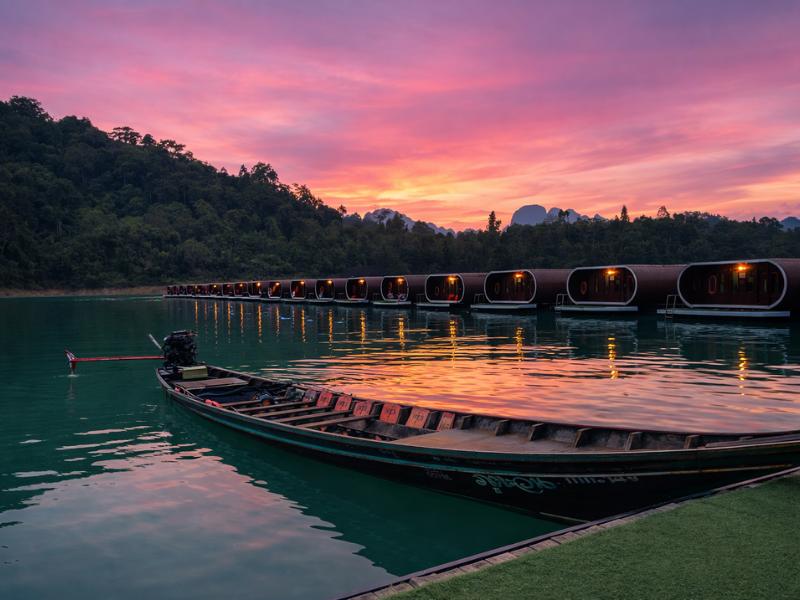
Each month at Khao Sok has a distinct character shaped by rainfall, temperature, crowd levels, and which activities are at their best. The months of January and February deliver the easiest conditions and the hardest booking environment. May and October deliver the best balance of green jungle, available accommodation, and manageable weather. August and September are the wettest months and suit travelers specifically seeking the most dramatic version of the rainforest experience.
| January | Cool, driest month (~60 mm) | Peak season | Best trails, Rafflesia blooming, book lake 6-8 weeks ahead |
| February | Cool, very dry | Peak season | Rafflesia blooms, river may be low for tubing |
| March | Warming, dry but hazy | High, declining | Best elephant sighting window begins, hot midday |
| April | Hot (30-35°C), humidity rising | Moderate | Early mornings essential, river may be too low for tubing |
| May | Transitional, first rains arriving | Low | Excellent balance: green jungle starting, few crowds, all caves open |
| June | Wet season starts, daily rain | Very low | Nam Talu Cave closes June 1. River activities improving. |
| July | Warm, frequent heavy rain | Low | Excellent river tubing, waterfalls at volume, lush green |
| August | Heavy monsoon, wettest window | Low | Dramatic conditions, maximum jungle green, strong waterfalls |
| September | Peak rainfall (~400+ mm) | Very low | Lake mist at maximum. Most atmospheric floating bungalow experience. |
| October | Heavy rain tapering slightly | Very low | Excellent wildlife, lush jungle, good value – watch for cyclonic patterns |
| November | Transitional, rains easing | Low, rising | Nam Talu Cave reopens December 1. Book ahead as crowds return. |
| December | Dry season resuming, coolest nights | Very high (Christmas peak) | Book floating bungalows 2-3 months ahead for Dec 20 – Jan 5 window |
The geographic uniqueness of Khao Sok is worth keeping in mind when reading weather data. The park sits between both monsoon tracks and its limestone mountains force clouds to rise and release rainfall that nearby coast towns do not see. Weather apps and forecasts calibrated to Surat Thani town or Phuket are unreliable predictors of conditions inside the park. A clear forecast in the city does not mean clear weather on the trail, and vice versa. The guides and local accommodation operators carry better real-time information than any app. If you are booking specific activities like the Rafflesia hike or a cave tour, confirm conditions with the operator the morning of, not the week before.
What Should You Book in Advance Depending on When You Visit?
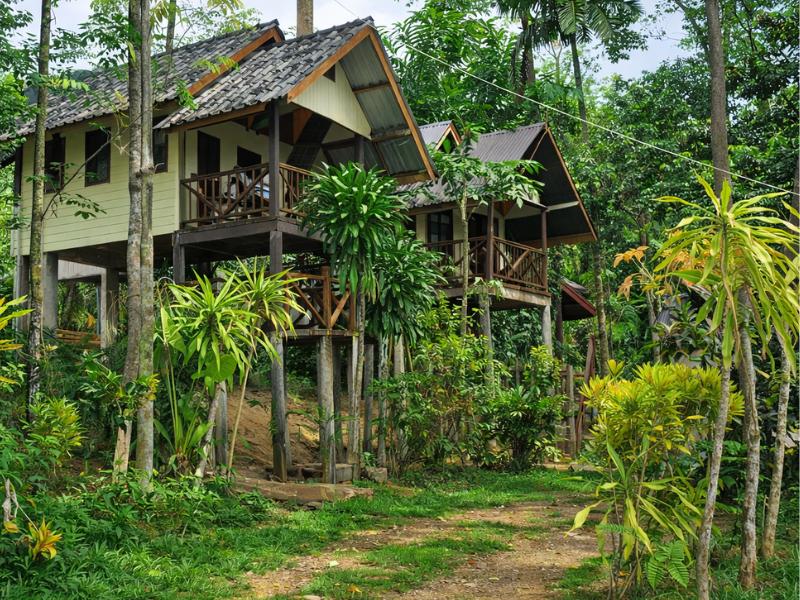
What requires advance booking at Khao Sok depends entirely on the month. In peak season (December to February), the floating bungalows are the critical constraint: book four to eight weeks ahead for mid-range properties and six months ahead for the most popular luxury options during Christmas and New Year. In shoulder and low season (May to October), village accommodation can be arranged close to arrival, and lake packages are available one to two weeks ahead. The one thing that requires advance booking in any season is a quality guided tour through a reputable operator.
The booking hierarchy for Khao Sok across seasons breaks down clearly. The floating bungalow on Cheow Lan Lake is always the scarcest resource because supply is finite and fixed. There is a limited number of floating properties, each with a limited number of rooms. No amount of demand creates more rooms. In January, the math works against last-minute travelers. In September, the math works in their favor.
Village accommodation follows a softer curve. Even in January, a traveler arriving in Khlong Sok without a booking can usually find a room within an hour of asking around. In shoulder months they will have more choices, better rates, and first pick. Treehouses and the specific riverside properties that travelers write about enthusiastically do fill during peak season, so they warrant a few days of advance notice even in lower-demand months.
Tour guide availability is the booking constraint that most travelers miss entirely. A good guide is not a generic service that can be filled by any available person. The guides who know where the Rafflesia host vines are currently active, who can identify an animal by sound 50 meters into the dark, who know which section of the Sok River is running fastest this week: these are individuals with knowledge built over years of working the same trails. They get booked. In peak season they get booked weeks ahead. Booking a reputable tour operator rather than assembling guides independently is the practical solution for most travelers.
Planning choices to compare
| Insight | Krittanon’s Note |
|---|---|
| Visited during dry season (Dec-Apr) | Majority, follows the global travel pattern |
| Visited during shoulder season (May-Jun, Sep-Oct) | Growing segment; consistently report high satisfaction |
| Visited during wet season core (Jul-Aug) | Smaller group, skew toward experienced travelers |
| Said wet season trip exceeded expectations | The surprise factor is consistently high |
| Had to rebook lake due to insufficient advance notice (peak season) | Most common peak-season frustration – book early |
| Saw the Rafflesia flower (January-February visitors) | Sightings never guaranteed – depends on bloom timing |
| Would return in a different season based on guide recommendation | The best endorsement for Khao Sok’s year-round appeal |
Frequently Asked Questions
Is Khao Sok worth visiting in the rainy season?
Yes. The park is more green, more atmospheric, and more affordable in the wet months. The typical pattern of dry mornings and afternoon showers means most activities run unaffected. The main constraint is Nam Talu Cave, which closes June 1 through November 30. All other activities, including the lake floating bungalows, remain fully operational.
When does Nam Talu Cave close and why?
Nam Talu Cave closes to visitors every year from June 1 through November 30 due to the risk of flash flooding during the rainy season. This is an enforced Department of National Parks closure. The cave has a history of tragic flooding incidents. Any tour operator offering Nam Talu Cave during this period is operating illegally. Other caves in the park remain accessible with a licensed guide during the wet season.
When is the best time to see the Rafflesia flower at Khao Sok?
The Rafflesia kerrii at Khao Sok blooms primarily between December and March, with January and February being the peak window. Each individual bloom lasts only three to five days before decaying. Sightings are never guaranteed regardless of timing. A dedicated Rafflesia guided hike should be booked specifically for this purpose, as the bloom locations change each season and only current local guide knowledge can give you a realistic chance of finding one.
How far in advance should I book during peak season?
For the floating bungalows on Cheow Lan Lake: four to eight weeks ahead for mid-range properties during December through February, and six months or more ahead for popular properties like Panvaree The Greenery during the Christmas and New Year window. Village accommodation can usually be arranged closer to arrival even in peak season, though treehouses and riverside properties with the best reviews fill early.
What is the best time to see elephants at Khao Sok?
Wild elephant sightings on the lake wildlife boat safaris are most common during the hot dry months of March through May, when animals venture to the lake shore to drink as water sources in the deep forest become scarcer. That said, elephants are seen in all months and cannot be predicted. Sunrise and sunset boat safaris have significantly higher sighting probability than midday boats regardless of season.
Does rain ruin the floating bungalow experience?
Rain during a lake stay is, for most travelers, an enhancement rather than a problem. The floating bungalows are designed for the rainforest environment: rain on the bamboo roof at night has a specific quality that guests consistently describe as one of the most memorable sleep experiences of their trip. The morning mist effect that makes Cheow Lan Lake look otherworldly is actually more pronounced during and after rain. The lake itself looks most dramatic in low cloud.
Plan Your Visit Around the Season That Suits You
Thai tour guide since 2011 · Founder, Khao Sok National Park Tours
Krittanon has guided over 11,200 travelers through Khao Sok’s rainforest, Cheow Lan Lake, and jungle trails since founding the agency.
Your next step · Match the season to your activity
Check your date before fixing the rest of your trip
General starting suggestion — confirm the itinerary, pickup and restrictions before booking.
Two-day lake stay with AC & private bathroom
Stay one night on the lake, with a sunset boat outing, morning kayaking and a guided forest walk.
Two days, one lake night. AC and private bathroom; raft house assigned by availability. Electricity 18:00–06:00. Meals, park fee and transfers included for the selected Khao Sok, Khao Lak or Phuket option. Kayak deposit 500 THB. Ages 8+; not for pregnancy, mobility impairments or wheelchair users. Returns to pickup area; different drop-off needs operator agreement.
Compare alternatives & adapt this suggestion
Meaningful alternatives · Compare the itinerary and restrictions. Select your priorities above to update the single booking action.
| Experience | Why choose it | What to check |
|---|---|---|
| Two-day lake stay with AC & private bathroom | Stay one night on the lake, with a sunset boat outing, morning kayaking and a guided forest walk. | Two days, one lake night. AC and private bathroom; raft house assigned by availability. Electricity 18:00–06:00. Meals, park fee and transfers included for the selected Khao Sok, Khao Lak or Phuket option. Kayak deposit 500 THB. Ages 8+; not for pregnancy, mobility impairments or wheelchair users. Returns to pickup area; different drop-off needs operator agreement. |
| Private Cheow Lan longtail boat | Cruise the limestone bays with your own captain, with a cave stop on the listed route. | 4–6 hours by option. Meet at the pier or select road-accessible Khao Sok hotel pickup. Captain speaks basic English; this is not an English-led nature walk. Lunch, park and pier fees are extra. Cave omission must be arranged by the day before. No wheelchair or mobility access; child eligibility needs confirmation. |
| Private trek, jungle dinner & night safari | Combine an afternoon forest walk, jungle dinner and a guided search for nocturnal wildlife. | About 7 hours, with afternoon pickup around 13:30. English guide, Khao Sok hotel transfers, dinner, water and park fee included. Khao Lak pickup costs extra. Not for under-4s or pregnant travelers. Uneven trails; confirm fitness requirements. |
| Khao Sok evening wildlife walk | Spend about two hours on forest trails with an English-speaking wildlife guide after dark. | 2.5 hours including Khao Sok transfers; water and park fee included. Private or shared option. Bring a flashlight, closed shoes and repellent. Not for children under 6. Wildlife sightings are not guaranteed. |
| Private organic-farm cooking class | Pick herbs in an organic garden and cook Thai dishes with an English-speaking instructor. | 3 hours; Khao Sok hotel pickup, ingredients and water included. Khao Lak pickup extra. Confirm dietary needs and children’s participation with the operator; age and access limits are not established. |
| Two-day bamboo floating-bungalow stay | Sleep in a rustic lake bungalow and take a morning mist boat safari, with meals and a local guide. | Two days, one night. Meet Khao Sok Lake office in Ta Khun at the listed morning time, returning there early afternoon next day. No Khao Sok hotel pickup: operator does not accept tours originating at those hotels. Ages 10–70 and moderate fitness. Park fees and transport to the office are extra; cave/viewpoint route varies with conditions. |
Compare two complete quotes
Use total party quotes in THB, including transport, park fees, meals and accommodation for the same itinerary. No supplier prices are assumed.
We may earn a commission from qualifying bookings. Provider prices and availability are confirmed at checkout.