What to Wear in Khao Sok National Park
Packing for Khao Sok is all about heat, humidity, rain, and insects. Here’s what to wear for jungle hikes, lake tours, night safaris, and the one item most travelers forget.
Choose your activities first, then pack for the longest trail and the wettest part of the route.
Last updated: September 9, 2026
Khao Sok is a tropical rainforest operating at 26 to 35°C year-round with high humidity in every month. The clothing logic is simple: quick-dry synthetic fabrics only, never cotton. Long lightweight pants and a long-sleeved shirt for any trail activity provide the best protection against insects and leeches without adding meaningful heat. Trail runners or amphibious shoes that can get fully wet beat hiking boots every time here. On the lake, swimwear is the primary outfit with a light layer for the boat crossing. The night safari adds closed-toe shoes and long sleeves as non-negotiables. The one item most travelers forget and wish they had packed is a compact headlamp worn at head level rather than a phone torch.
Which activity sets your packing list? The short evening forest walk calls for covered trail clothing and a flashlight. Explore the evening wildlife route
| Jungle trek (dry season) | Long-sleeve quick-dry shirt | Lightweight long pants | Trail runners / amphibious shoes | Insect repellent, hat |
| Jungle trek (wet season) | Long-sleeve quick-dry shirt | Long pants + leech socks | Trail runners (expect them wet) | Compact rain jacket, insect repellent |
| Lake / floating bungalow | Swimwear + light layer for boat | Swim shorts or sarong | Flip-flops / sandals | Dry bag, sunscreen |
| Lake cave hike / viewpoint | Quick-dry shirt | Shorts or quick-dry pants | Closed-toe shoes that get wet | Change of clothes in dry bag |
| Night safari | Long-sleeve shirt (light colour optional) | Long pants | Closed-toe shoes | Headlamp, insect repellent |
| River tubing / canoeing | Quick-dry shirt or swimwear top | Shorts or swim shorts | Amphibious sandals (closed-toe) | Dry bag for phone and wallet |
What Is the General Dress Code for Khao Sok National Park?
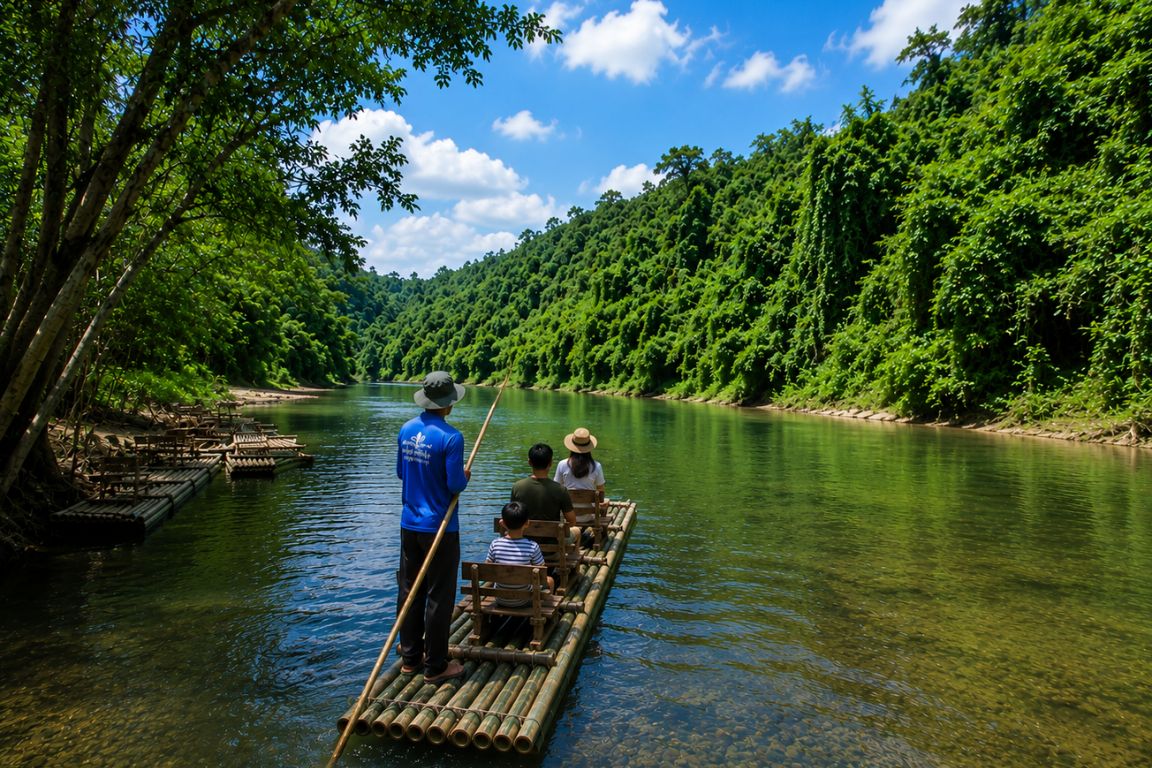 There is no formal dress code at Khao Sok beyond the standard Thai temple etiquette that does not apply in the national park. The practical dress logic is determined entirely by the environment: high humidity, stream crossings, insect exposure, and the near-certainty of getting wet at some point. Quick-dry synthetic fabrics in any colour work well. Cotton feels fine for the first twenty minutes and then clings heavily for the rest of the day. Modest coverage protects against insects and leeches better than any spray can replicate.
The first thing every experienced guide at Khao Sok says about clothing: forget what you packed for the beach. The same bikini and board shorts combination that serves perfectly on Krabi‘s coast becomes functionally uncomfortable within an hour on a jungle trail. This is not about aesthetics. It is about material science in a high-humidity environment. Cotton absorbs moisture and holds it. Synthetic fabrics and merino wool release moisture and dry quickly. At 30°C with 85% humidity, this distinction matters more than any other single clothing choice you make.
The second principle, which surprises many travelers who assume the tropics demand maximum skin exposure for cooling: coverage is your friend at Khao Sok. Long lightweight pants and a long-sleeved shirt protect against mosquitoes, leeches on wet-season trails, the thorny edges of plants overhanging the path, and the sun during the longtail boat crossings on the lake. A long-sleeved shirt in a loose quick-dry fabric at 30°C in the jungle feels barely different from a T-shirt. The same shirt at the same temperature in wet cotton is genuinely uncomfortable.
Khao Sok has no dress code for religious sites and no rules about covering up in the village. The village is relaxed and tourist-oriented. You can walk the main street in beach clothes without issue. The considerations are purely practical once you are on a trail or on the water.
What Should You Wear for Jungle Trekking in Khao Sok?
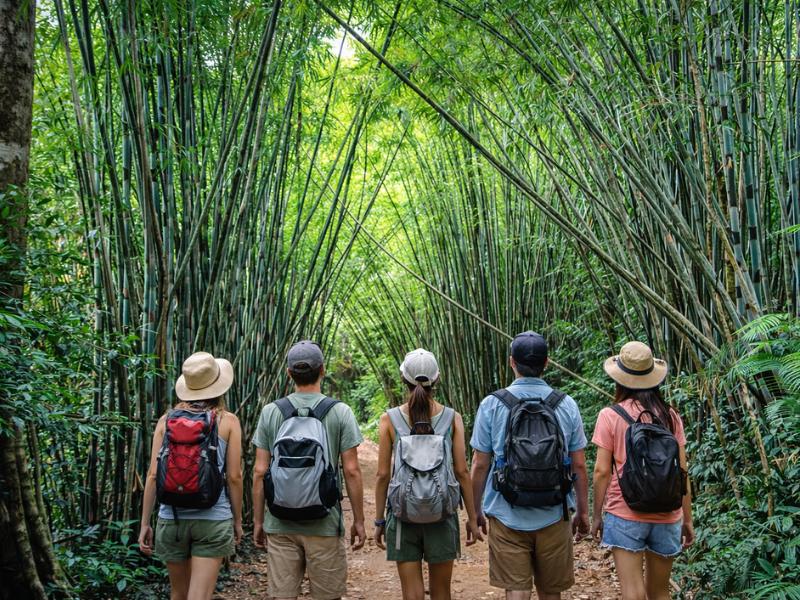
For jungle trekking at Khao Sok, wear a lightweight long-sleeved shirt and loose quick-dry long pants, closed-toe trail shoes or amphibious footwear, a hat for sun exposure on open sections, and DEET-based insect repellent applied to any exposed skin before the trail. In wet season (June through October), add leech socks over your regular socks. The combination is not about looking like an explorer. It is about being comfortable for 4 to 8 hours in a rainforest.
The fabric choice on the shirt matters more than the sleeve length. A loose quick-dry long-sleeved shirt at 30°C with air moving through it is cooler than a cotton T-shirt, not warmer, because the wicking effect and slight air flow through the looser weave removes body heat. Tight synthetic shirts work against you in the same way cotton does by trapping heat rather than releasing it. Loose is the operative word. The shirts that look like they belong on an East African plains safari actually work perfectly in a Southeast Asian jungle context for exactly this reason.
Long pants on the trail serve three functions. They prevent leech attachment in the wet season, which requires nothing more than the fabric surface between the leech and your skin. They protect against the edges of bamboo and the odd thorny plant that overhangs narrower trails. And they provide a layer against mosquitoes, which are more active in the early morning and after 4 pm when the most worthwhile trail time happens.
The leech question is the one that generates the most anxiety in pre-trip planning. Leeches are present on wet-season trails from approximately June through October. They are not dangerous. They carry no disease in the Khao Sok context. They find you through ground vibration and attach where skin is accessible. Long pants tucked into long socks, or dedicated leech socks worn over your regular socks, prevents virtually all contact. If one attaches, do not rip it off. The guide carries tobacco or salt, which causes detachment cleanly. A ripped-off leech leaves the mouthpart embedded and bleeds persistently for several hours due to the anticoagulant. A properly removed leech is a minor inconvenience that you briefly mention in your trip journal and then forget.
What Should You Wear on Cheow Lan Lake and the Floating Bungalows?
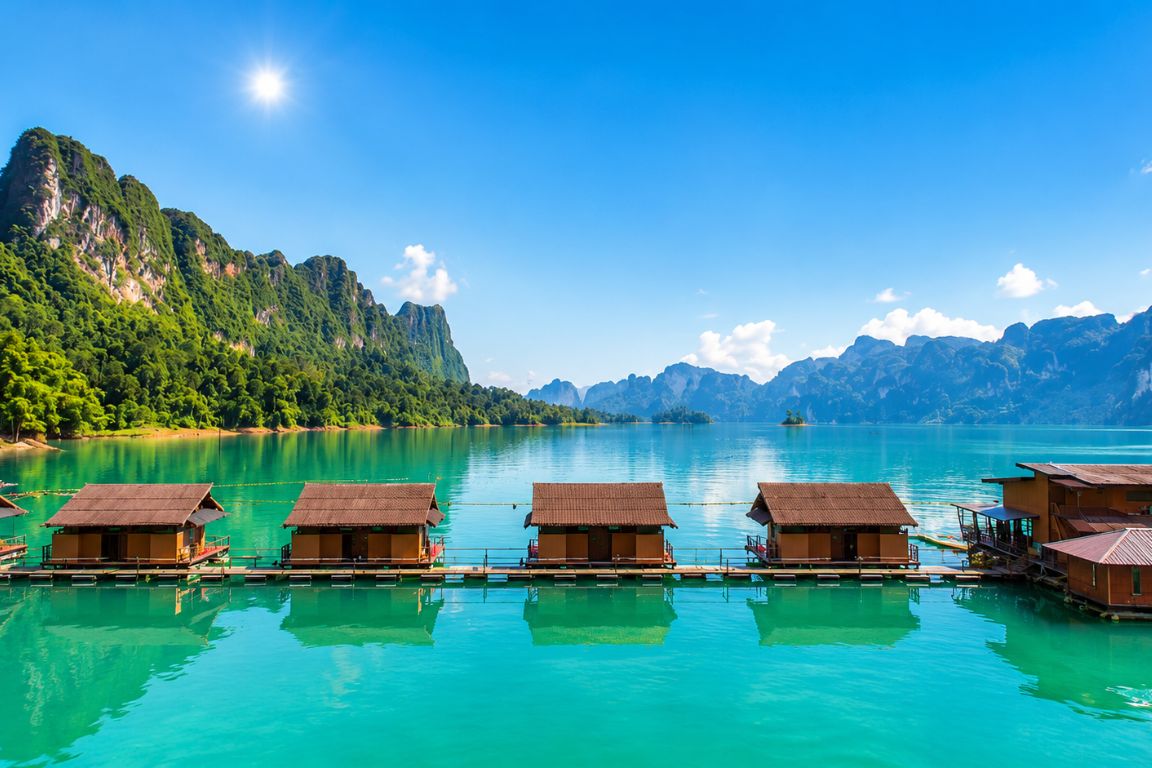
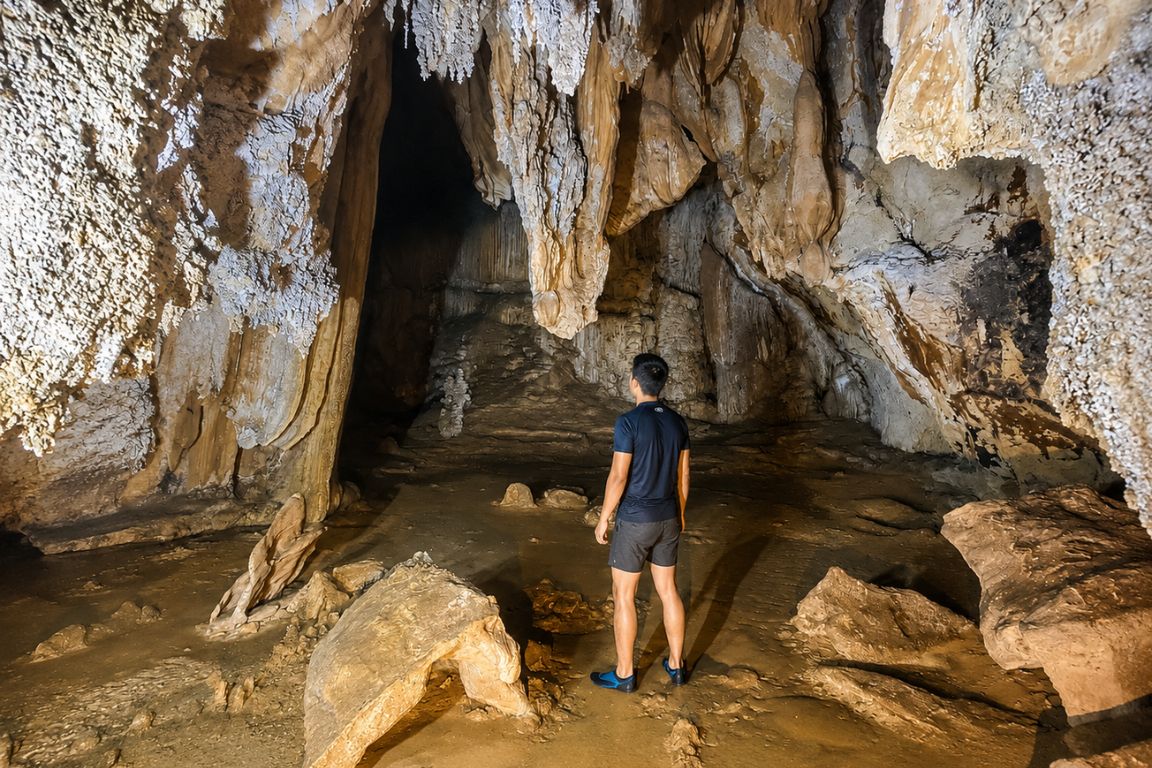 On Cheow Lan Lake and at the floating bungalows, the primary outfit is swimwear. You will swim, kayak, and likely get splashed on the longtail crossing. Bring a lightweight long-sleeved layer or a rashguard for the boat crossing and the open-water sections where sun exposure is direct and prolonged. A sarong or light wrap works for moving between the bungalow and shared facilities. Flip-flops or sandals handle the walkways. The cave hike from the lake requires closed-toe shoes and clothes that can get completely wet.
The longtail crossing deserves specific mention for clothing planning. The boat ride from the pier to the floating bungalow takes 45 to 90 minutes at speed on open water with no overhead cover. At midday in the dry season, this is intense sun exposure on reflective water. A thin long-sleeved layer or rashguard covers skin that sunscreen alone would burn over 90 minutes. On the return crossing, the same applies. Sunburn on the boat ride to and from the lake is the most consistent minor health issue Krittanon sees among lake visitors who packed only swimwear.
The floating bungalow life itself is primarily aquatic. You wake up, swim from the deck, kayak in whatever you slept in or change into swimwear immediately, eat breakfast, swim again. A typical lake day involves being in or near water for most of the daylight hours. Quick-dry fabrics mean you are not spending the afternoon in wet clothing. Two swimsuits or a swimsuit and quick-dry shorts that double as swimming shorts cover the full range of lake activities without unnecessary luggage.
The cave hike from the lake changes the clothing picture completely. Whether you visit Coral Cave or a viewpoint trail from your bungalow, the hike involves jungle terrain where flip-flops are genuinely dangerous on slippery roots and stream crossings. Bring one set of closed-toe shoes that can get completely wet and dry overnight. Trail runners work perfectly. Old trainers you do not mind ruining also work. What does not work is anything with an open toe, which is vulnerable to the bamboo slivers and sharp rock edges that appear occasionally on cave approaches.
Want to make the lake a proper highlight of your Khao Sok visit rather than just an add-on? Here’s our Khao Sok lake tours explained guide so you know exactly what you’re getting into.
What Footwear Works Best in Khao Sok?
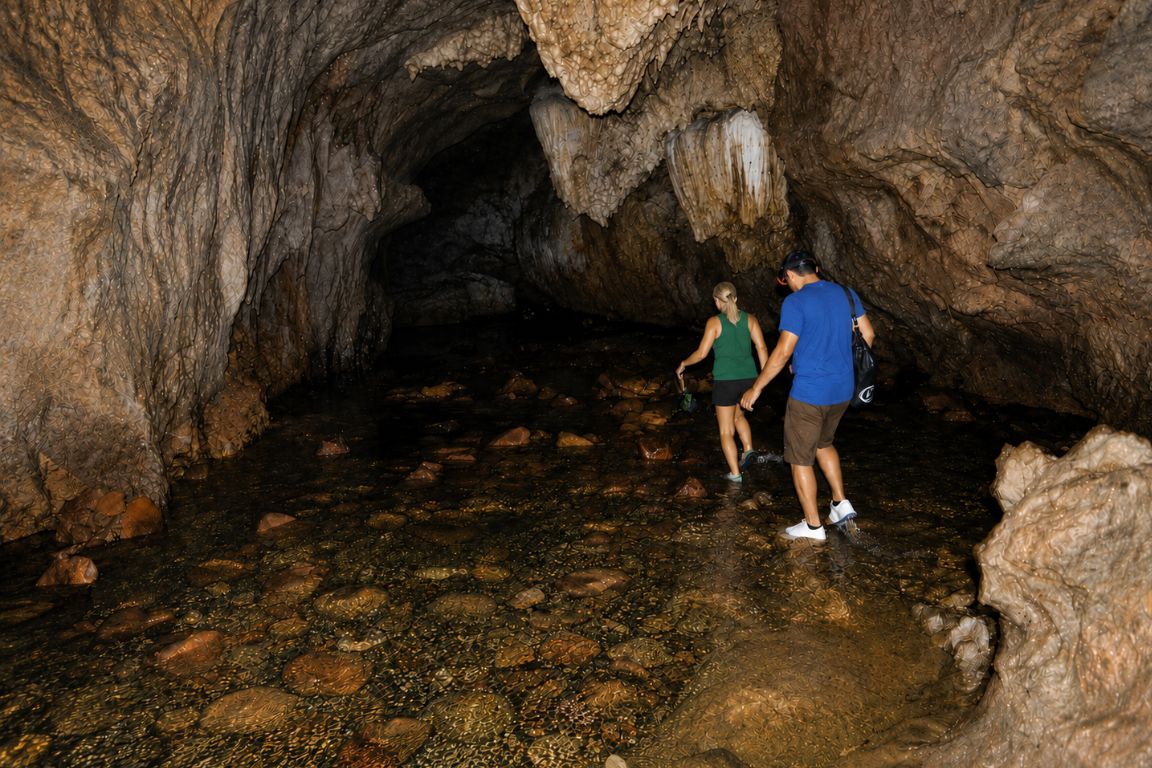 The best footwear for Khao Sok is amphibious trail runners or amphibious shoes with a covered toe and secure heel. These handle stream crossings, muddy trails, and cave approaches while drying quickly and providing enough grip for uneven terrain. Hiking boots are specifically not recommended by experienced Khao Sok guides: they become waterlogged within the first stream crossing, stay wet for hours, and are difficult to clean. The enemy at Khao Sok is not lack of ankle support. It is wet footwear that never dries.
The hiking boot instinct at a national park is understandable and wrong for Khao Sok specifically. Most hiking boot advice assumes dry terrain, significant elevation change, and the possibility of ankle rolls on loose scree. Khao Sok’s trails are jungle flat or moderate gradient, frequently wet from stream crossings regardless of season, and clay-based rather than rocky. Heavy waterproofed boots become saturated at the first stream crossing because tropical trails cross streams, they do not avoid them. Once saturated, they carry the weight of the water for the rest of the hike. Trail runners and amphibious shoes drain and dry in 20 to 30 minutes of continued movement. Boots stay wet until you remove them.
The second footwear category worth mentioning is for the lake stay: a dedicated pair of flip-flops or sandals for the floating bungalow. The walkways between bungalow units and the shared bathroom are wooden, sometimes damp, and narrow. Walking them in socks or bare feet at 3 am in the dark is a situation that a cheap pair of flip-flops prevents entirely. Pack them separately and keep them at the bungalow door.
The specific footwear that works best for the Nam Talu Water Cave (open December through May, closed June through November) is water shoes or amphibious shoes. The cave route involves wading through water at chest depth for 600 metres. Open sandals are unsuitable because the cave floor has submerged rock and uneven surfaces. Closed amphibious shoes provide grip and protection without filling with sediment the way regular trainers do.
What Should You Wear for the Night Safari?
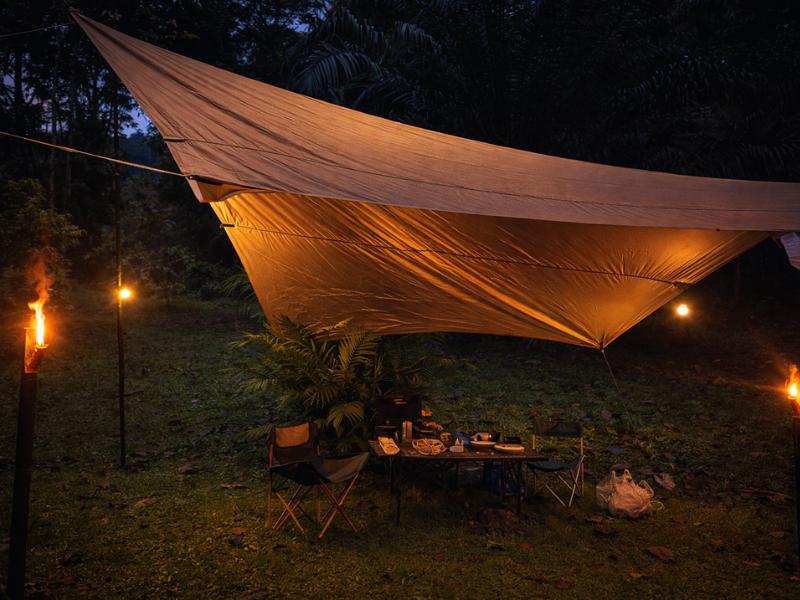
For the night safari, wear long-sleeve shirt and long pants in any colour, closed-toe shoes with grip for uneven trail surfaces, and DEET-based insect repellent applied before departure. The temperature drops slightly after dark to around 24 to 27°C, making long coverage comfortable rather than hot. Headlamp required: hands-free lighting is essential for following a guide who stops without warning to point at an animal inches from the trail. A phone torch pointed at waist level leaves you unable to react quickly when the guide signals something above head height.
The colour advice that circulates about night safari clothing, specifically that dark colours attract fewer insects or that light colours make you more visible to wildlife and should be avoided, is not supported by any consistent evidence in the Khao Sok guide community. Wear whatever colour your quick-dry long-sleeved shirt comes in. The relevant factors are coverage and insect repellent, not colour. Krittanon has run night safaris in every combination of guest clothing for 14 years and the colour of the shirt has never materially affected the experience.
The headlamp is not optional. A phone torch held in front of you points at the trail surface or slightly forward. Your guide stops suddenly and tilts their head up toward a branch at a 60-degree angle. By the time you have repositioned the phone torch, the animal has moved. A headlamp mounted on your forehead points exactly where your eyes are looking, instantaneously, with both hands free to hold your camera, support yourself on uneven ground, or stay quiet by not fumbling with a device. Basic LED headlamps cost around 200 Baht at the village shops. Bring one from home or buy one in the village that afternoon. Do not attempt the night safari with only a phone torch.
One practical clothing note for the night safari specific to the timing: the tour departs around 7 to 7:30 pm and returns around 9 to 10 pm. Dinner may be before or after depending on your package structure. If you are eating dinner before the safari, eat in your trail clothes so you do not need to change in the dark afterward. If dinner follows the safari, bring a light change of clothes or simply wear the long-sleeve shirt and pants to the restaurant. The village open-air restaurants have no dress requirements whatsoever.
How Does What You Pack Change Between Dry Season and Wet Season?
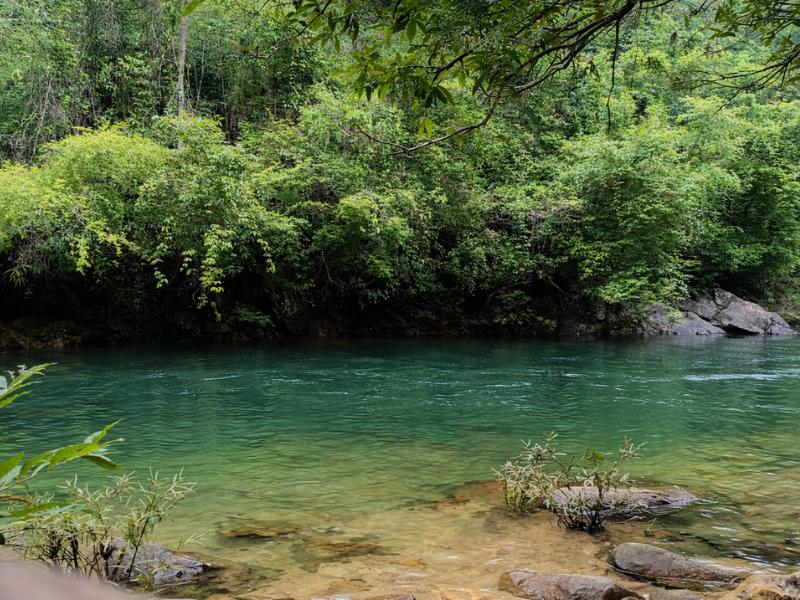
The core clothing list for Khao Sok barely changes between seasons. What changes is the addition of leech socks for wet-season trails, the upgrade from optional to mandatory for the compact rain jacket, and the swap from “bring a dry bag” to “treat everything as going to get wet.” The fundamental clothing strategy, quick-dry synthetic fabrics, long coverage on trails, swimwear at the lake, closed-toe shoes, remains identical. The difference is in degree and preparation, not category.
Dry season (December through April) allows more flexibility. Short trail walks in shorts and a T-shirt are fine on the main paths near the headquarters. The sun is intense, so a hat and sun protection matter more than rain protection. The trails are drier, leech exposure is low to moderate even without leech socks, and the risk of your clothes staying wet is primarily from sweating rather than rain. The compact rain jacket can live in the daypack just in case but rarely comes out between January and March.
Wet season (May through October) makes previously optional items mandatory. The compact rain jacket goes from the bottom of the pack to the top. The leech socks stop being optional for any trail that goes off the main path. The dry bag for your phone and electronics stops being a good idea and becomes a requirement, because the afternoon downpour can arrive 30 minutes faster than predicted and can be genuinely heavy. A spare quick-dry shirt in a sealed plastic bag inside your pack means you are never stuck in wet clothes for the rest of the afternoon.
| Quick-dry long-sleeve shirt | Essential | Essential |
| Lightweight long pants | Essential | Essential |
| Compact rain jacket / poncho | Optional (pack it anyway) | Mandatory |
| Leech socks | Optional (lower risk) | Strongly recommended for all trails |
| Dry bag for electronics | Recommended | Mandatory |
| Spare quick-dry shirt in sealed bag | Optional | Recommended |
| Wide-brim sun hat | Essential (intense sun) | Useful but less critical |
| Swimwear | Essential | Essential |
| Trail runners / amphibious shoes | Essential | Essential (accept them wet) |
A note on the rain jacket choice: the packable ultra-thin options that compress to the size of a fist are perfectly adequate for Khao Sok. You are not dealing with cold rain. You are dealing with warm tropical downpours that last 60 to 90 minutes and then clear. The jacket’s job is to keep your shirt from being soaked through during that window. A breathable membrane is nice but unnecessary. A cheap packable poncho available in the village for 50 Baht does the job adequately if you forgot to bring one from home.
Khao Sok in the dry season and the wet season are two completely different experiences – our best time to visit Khao Sok National Park tours guide breaks down what each period actually delivers on the ground.
What Should You Absolutely Not Wear or Bring to Khao Sok?
 Do not bring heavy hiking boots, cotton clothing as your primary trail layer, open-toed sandals for jungle trails or cave hikes, or any footwear you are not prepared to get completely wet. On the lake, leave the main suitcase in the village: floating bungalows have nowhere to store large bags and longtail boats have limited space. White or very light-coloured clothing is not a problem for wildlife but becomes visually unpleasant after the first muddy trail section. Perfume and strongly scented products attract mosquitoes and should be minimised.
The hiking boot mistake is so consistent that it deserves a direct statement: Khao Sok’s own trek guide website says “do not bring hiking boots.” This is not generic tropics advice. It is specific to the trail conditions here. The first stream crossing turns a waterproofed boot into a bucket of water attached to your ankle. That water stays there. Heavy boots that become waterlogged add significant fatigue over a 4 to 6-hour hike that lightweight trail runners do not. The guides who have watched thousands of guests on these trails converge on the same recommendation: trail runners or good grip sandals with closed toes.
Cotton as the primary trail layer is the second consistent mistake. A cotton T-shirt at the beach is fine. A cotton T-shirt after 30 minutes on a jungle trail in 30°C heat is a damp second skin that does not dry, adds body heat through the cling effect, and provides no benefit over a loose quick-dry synthetic that weighs the same and packs to half the size. The village shop sells basic quick-dry shirts at reasonable prices if you arrive with only cotton. It is worth buying one before your first trail activity.
Open-toed sandals on jungle trails expose your toes to bamboo slivers, rock edges, and the occasional centipede that is crossing the path. None of these are severe risks but all of them are easily prevented by a closed-toe shoe. Choose the actual shoe model by its covered toe, secure heel and wet-surface grip; brand names alone do not establish toe protection. Standard flip-flops are fine around the bungalow and village. On any trail, they are genuinely unsuitable.
What Is the One Item Most Visitors Forget That They Wish They Had?
The item that comes up most consistently in post-trip conversations with Krittanon’s guests is a dedicated headlamp. Not a phone torch. A head-mounted LED lamp with hands-free operation. It is essential for the night safari, genuinely useful for the floating bungalow bathroom trip at 3 am, and the single piece of gear that separates a confident trail experience after dusk from a frustrating one. It costs 150 to 200 Baht at the village shops and weighs almost nothing. Almost every traveler who does not bring one wishes they had.
The reason the headlamp outperforms the phone torch is physics and ergonomics combined. A guide stopping suddenly on a dark trail to illuminate a Wagler’s pit viper in a low branch requires your eyes and your light to point at the same thing simultaneously. With a phone torch in your hand, there is a reaction time gap between where you are looking and where your light is pointing. With a headlamp, they are the same direction at all times. The guide has waited for the group to gather. A phone torch aimed at the trail surface while you are looking upward misses the moment entirely.
The floating bungalow bathroom element is less dramatic but equally practical. The shared bathrooms at budget and mid-range lake properties are along the outer walkways, 20 to 50 metres from some bungalows. At 3 am with no generator power running, these walkways are completely dark. A phone torch requires holding the phone while navigating narrow wooden planking above the lake surface. A headlamp does not require you to think about it at all. Several of Krittanon’s guests have turned back from the bathroom in the dark rather than navigate without proper lighting. A 200 Baht headlamp from the village shop solves this entirely.
Other frequently forgotten items that deserve brief mention: leech socks for wet-season visits (available in the village, relatively cheap), a compact quick-dry microfibre towel for the lake stay where bungalow towels are sometimes thin, and button-pocket shirts for jungle trails where things fall out of open pockets when you duck under branches. These are the items that do not appear on generic Thailand packing lists because they are specific to what Khao Sok asks of you.
Planning choices to compare
| Clothing / Gear Issue | Krittanon’s Fix |
|---|---|
| Brought hiking boots (got waterlogged) | Trail runners or amphibious shoes only |
| Arrived with only cotton clothing | Village shop sells quick-dry shirts – buy on arrival |
| No headlamp for night safari | 150-200 Baht at village shop, buy before 4 pm departure |
| Open-toed sandals on jungle trail | Closed-toe shoes for any trail activity |
| No rain jacket (wet season) | 50-Baht ponchos available in village – or bring a packable jacket |
| Sunburn on longtail boat crossing | Long-sleeve layer for the 45-90 minute open-water boat ride |
| No dry bag for phone and camera | Essential at the lake – longtail spray and rain will find unprotected electronics |
Frequently Asked Questions
Should I wear long pants or shorts for jungle trekking at Khao Sok?
Long lightweight quick-dry pants are better for any trail activity at Khao Sok. They protect against mosquitoes, leeches in wet season, and the thorny or rough-edged plants that overhang narrow paths. In a loose quick-dry fabric at 30°C, the temperature difference between long pants and shorts is minimal. The protection difference is significant.
Are hiking boots suitable for Khao Sok?
No. Khao Sok’s own guides specifically advise against hiking boots. The trails involve frequent stream crossings and waterlogged sections that saturate any boot immediately. Once wet, heavy hiking boots stay wet for hours and add fatigue. Trail runners or amphibious sandals with closed toes drain and dry in 20 to 30 minutes of continued movement.
What should I wear on the longtail boat to Cheow Lan Lake?
A lightweight long-sleeved layer or rashguard over swimwear for the crossing. The boat ride takes 45 to 90 minutes on open water with direct sun and no cover overhead. Sunburn on the crossing is one of the most common minor health issues among lake visitors who packed only swimwear. At the lake, swimwear is the primary outfit.
Do I need special clothing for the night safari?
Long-sleeve shirt and long pants (both quick-dry), closed-toe shoes, and DEET insect repellent applied before departure. A headlamp is essential: not a phone torch, but a head-mounted LED lamp. Hands-free lighting is what allows you to react instantly when the guide spots something above head height in the dark.
What should I wear in the wet season at Khao Sok?
The same core layers as dry season plus a compact rain jacket as a mandatory rather than optional item, leech socks for any trail that goes off the main path, and a dry bag for electronics treated as non-negotiable. Accept that shoes will get wet. Quick-dry trail runners handle this far better than any waterproofed boot.
Can I buy appropriate clothing in Khao Sok village if I forgot something?
Yes. The village has small shops selling insect repellent, basic quick-dry shirts, flip-flops, ponchos, and simple headlamps. The selection is limited and quality varies, but the essentials are available. Leech socks and specific gear items are harder to find. Better to bring those from home or buy in Phuket, Krabi, or Surat Thani before arriving.
Thai tour guide since 2011 · Founder, Khao Sok National Park Tours
Krittanon has guided over 11,200 travelers through Khao Sok’s rainforest, Cheow Lan Lake, and jungle trails since founding the agency.
Your next step · Match your packing to an activity
Check your date before fixing the rest of your trip
General starting suggestion — confirm the itinerary, pickup and restrictions before booking.
Khao Sok evening wildlife walk
Spend about two hours on forest trails with an English-speaking wildlife guide after dark.
2.5 hours including Khao Sok transfers; water and park fee included. Private or shared option. Bring a flashlight, closed shoes and repellent. Not for children under 6. Wildlife sightings are not guaranteed.
Compare alternatives & adapt this suggestion
Meaningful alternatives · Compare the itinerary and restrictions. Select your priorities above to update the single booking action.
| Experience | Why choose it | What to check |
|---|---|---|
| Khao Sok evening wildlife walk | Spend about two hours on forest trails with an English-speaking wildlife guide after dark. | 2.5 hours including Khao Sok transfers; water and park fee included. Private or shared option. Bring a flashlight, closed shoes and repellent. Not for children under 6. Wildlife sightings are not guaranteed. |
| Private trek, jungle dinner & night safari | Combine an afternoon forest walk, jungle dinner and a guided search for nocturnal wildlife. | About 7 hours, with afternoon pickup around 13:30. English guide, Khao Sok hotel transfers, dinner, water and park fee included. Khao Lak pickup costs extra. Not for under-4s or pregnant travelers. Uneven trails; confirm fitness requirements. |
| Private Cheow Lan longtail boat | Cruise the limestone bays with your own captain, with a cave stop on the listed route. | 4–6 hours by option. Meet at the pier or select road-accessible Khao Sok hotel pickup. Captain speaks basic English; this is not an English-led nature walk. Lunch, park and pier fees are extra. Cave omission must be arranged by the day before. No wheelchair or mobility access; child eligibility needs confirmation. |
| Two-day bamboo floating-bungalow stay | Sleep in a rustic lake bungalow and take a morning mist boat safari, with meals and a local guide. | Two days, one night. Meet Khao Sok Lake office in Ta Khun at the listed morning time, returning there early afternoon next day. No Khao Sok hotel pickup: operator does not accept tours originating at those hotels. Ages 10–70 and moderate fitness. Park fees and transport to the office are extra; cave/viewpoint route varies with conditions. |
Compare two complete quotes
Use total party quotes in THB, including transport, park fees, meals and accommodation for the same itinerary. No supplier prices are assumed.
We may earn a commission from qualifying bookings. Provider prices and availability are confirmed at checkout.